

Frozen Coral Hunt places members in a cold underwater setting with moving targets and direct controls. At 7V7V, players can review screen details before choosing any room or firing option. This guide supports members by explaining rules, controls, tactics, and room choices with practical examples.
How Frozen Coral Hunt builds its icy challenge
Frozen reefs, passing creatures, and changing paths shape every round on screen. Each movement gives players limited time to choose direction, timing, and shot strength. Frozen Coral Hunt requires reading changes before targets become blocked or disappear.
Icy effects create pressure, but target size and travel speed remain important. 7V7V presents clear icons for firing settings, current values, and completed result notices. Members can therefore identify available controls before sending any attack across the field.
Frozen Coral Hunt rewards observation because larger targets may need stronger or repeated attacks. Smaller creatures move faster, creating shorter chances but simpler aiming lines for players. Every round depends on matching weapon output with movement, distance, and screen position.
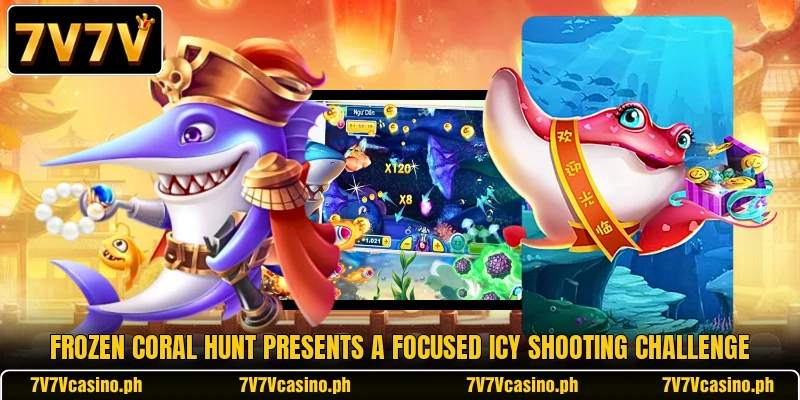
Rules and controls for accurate target selection
Each firing action connects with one target, selected value, and visible result. Members should read every control because room settings may change available shooting levels.
Read the moving target field
In Frozen Coral Hunt, targets enter from different edges and follow changing routes. Players should wait until the chosen creature has enough open space around it. A clean line reduces accidental hits on nearby objects crossing the same direction.
Fast creatures allow less adjustment time after players select their initial aiming point. Slower targets stay visible longer, although their required attack strength may differ. Reading pace first helps members choose a suitable firing level before acting.
Central targets usually remain visible longer than creatures arriving near screen edges. Players can follow one route briefly, then shoot when movement becomes predictable. This method links every action with visible behavior instead of random tapping.
Choose a suitable firing level
Firing levels represent different shot values, changing both action cost and attack power. Members should compare the displayed amount with target size before confirming each attempt. Lower settings may suit smaller creatures, while tougher targets need stronger output.
For example, PHP 1 shots can test controls without committing larger amounts. A PHP 5 option may fit clearer targets requiring stronger repeated attacks. USD equivalents can vary, so players should follow their room display carefully.
Frequent level changes can interrupt aim and make target tracking harder during crowds. Players should keep one setting briefly, observe results, then adjust using clear evidence. This approach connects control changes with screen conditions rather than sudden guesses.
Frozen Coral Hunt target timing
Good timing begins when one creature enters open water without overlapping targets. Members can aim ahead when movement stays steady across a straight horizontal route. Curved paths require patience because direction may change before the shot arrives.
Repeated attacks work best when the chosen target remains visible for continued tracking. Players should stop firing once that creature leaves or becomes completely blocked. Continued shots may reach unrelated objects without serving the original aiming purpose.
Frozen moments can slow movement, making target routes easier to read briefly. Members should use that window on one suitable creature instead of changing directions. A steady sequence provides clearer feedback than scattered shots across several targets.
View more: Abyss Ocean Hunter – Smart Sea Hunt Guide For Players
Confirm every completed round
Each completed action should show a result, updated balance, or clear response. Players need to check those signals before beginning another sequence at equal value. Missing feedback may indicate delayed processing, weak connection, or an unfinished command.
A stable connection supports smoother movement and more accurate control responses during rounds. Members should pause when animations freeze because repeated taps may register later. Waiting for normal motion prevents actions based on outdated target positions.
Frozen Coral Hunt records may show values, outcomes, and timing after completed play. Members should compare several entries instead of judging one isolated target result. Consistent records reveal which settings matched particular movement conditions more accurately.

Practical tactics for making better room decisions
Room selection changes screen pace, firing options, and decision speed for every member. Players should choose environments matching their preferred controls and displayed action values.
Match room pace with controls
A slower room gives new players more time to identify visible targets. Members can practice aiming, changing levels, and confirming results without constant pressure. Faster rooms demand quicker tracking because several creatures may cross together.
Frozen Coral Hunt feels clearer when members choose pace matching their reaction speed. Moderate movement helps players notice straight routes, overlaps, and sudden directional changes. This setting supports deliberate actions while providing enough activity for timing practice.
Before entering, players should review minimum values, controls, and room-specific entry conditions. PHP limits should fit planned actions because higher settings increase mistake costs. Members using USD displays should confirm conversion labels before selecting firing options.
Track clustered movement before firing
Crowded groups can hide target edges and make accurate selection more difficult. Players should watch the cluster and identify which creature will separate first. That opening creates a cleaner shot line with fewer blocking objects.
Large groups may look attractive, but scattered firing reduces control over individual actions. Members should follow one target until its direction becomes clear enough. This tactic makes result feedback easier to connect with a specific decision.
Frozen Coral Hunt becomes easier when players use screen lanes for organized tracking. Members can divide the field into upper, middle, and lower areas. Focusing on one lane reduces cursor movement and supports faster recognition.
Use special shots at clear moments
Special shots work best when their effect matches a visible target arrangement. Players should avoid activating them while creatures remain scattered or partly hidden. A compact group gives a clearer reason for using wider attack effects.
Members should read each icon description before spending PHP or USD on controls. Some effects cover an area, while others strengthen one selected attack sequence. Knowing that difference prevents useful tools from serving the wrong situation.
After activation, players should observe the full effect before pressing another special button. Frozen Coral Hunt may show rapid animations hiding movement and result details briefly. Waiting for completion keeps the next choice based on confirmed current positions.

View more Category: Fish
Conclusion
Frozen Coral Hunt offers a direct challenge built around movement, firing choices, and timely screen reading. Members can access it through 7V7V while checking room values and control details carefully. Register, download the app, start playing, and may every well-timed shot bring good luck.